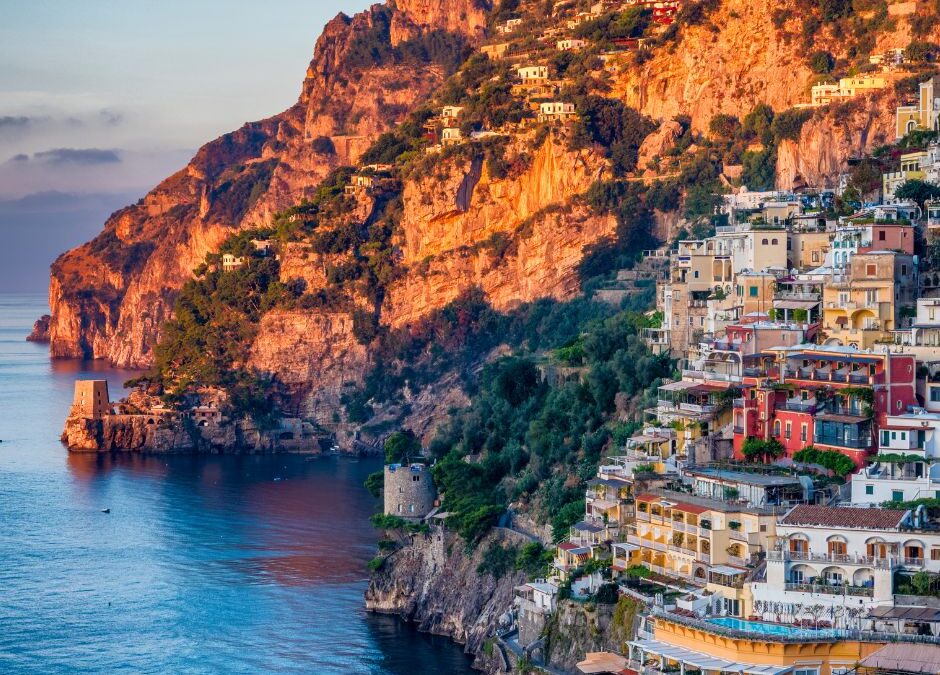
The South has warmed up its engines and is already on the take-off track. The past year has seen a proliferation of events and initiatives that put the southern regions at the centre of a new development under the banner of sustainability.
From the forum 'Towards the South' designed by Studio Ambrosetti at the seminars ISTAT organised in collaboration with local institutions (as in Sant'Agnello) and universities (as in Caserta), up to the most recent (such as in Reggio Calabria), at every event in which I have participated or in which I have spoken as a speaker, Tourism has been identified as a lever of sustainable development for the territories of Southern Italy.
THE HEALTH OF TOURISM
An ongoing focus on the health of tourism from different aspects:
- the statistical one, in which ISTAT plays a key role in research and data coordination;
- the strategic one, involving public institutions, Business Development and Destination Management experts and tourism operators
- the logistical one, which sees the construction of new infrastructure to accommodate the flow of Italian and foreign tourists
- the sustainable one, which pays attention not only to property development, but also and above all to the right balance with the surrounding environment and the full involvement of the local population.
STRENGTHS AND STRATEGIES TO BE IMPLEMENTED IN THE SOUTH
Currently, some factors still act as a 'handbrake'. Two above all, the low density of accommodation establishments, which is lower than the national average, and the marked seasonality that leads to overtourism and affects the sustainability of destinations in no small measure.
However, the resources to overcome criticalities and improve tourist attractiveness and diversification are inherent in the territories themselves, thanks to an immense heritage
- naturalistic, with 15 national parks and 24 marine protected areas
- artistic and culturalwith 22 UNESCO-protected sites and 175 authentic villages
- healthy, with 45 spas (1/3 of the total)
- sports, with 58,000 km of cycling routes (1/4 of the total)
The strategies to be implemented in synergy by public and private operators must therefore be capable of enhancing the accommodation offer and attracting new capital to the area with a view to creating 'poly-tourism' through
- the development of alternative tourism to the seaside and capable of generating more revenue
- the creation of integrated Euro-Mediterranean tourism products and routes
- the upgrading of infrastructure
- the development of territorial marketing
- the promotion of aggregation and internationalisation
- the definition and implementation of policies for the protection and preservation of natural and cultural heritage also jointly with the Mediterranean partners.
HUMAN RESOURCES AT THE CENTRE
Every sector has within it a unique and unparalleled driving force represented by Human Resources. As an expert connoisseur, but above all as a lover of my work and a lover of my land, I would like development to be accompanied by Training. A dream come true thanks to the Fondazione Scuola Italiana di Ospitalità, for which I have the honour of being a Board Member. A 'High School of Hospitality' capable of acquiring and training young talent, as well as instilling the same passion for the 'most beautiful profession in the world', for which we are recognised by the entire world as masters.
Another dream took its first steps with the project of a docu-experience aimed at bringing young people (and others) closer to the world of Tourism, especially in this delicate historical phase, as well as promoting a brand awareness no longer linked only to a territory or a sector, but to a style and a philosophy of life.


 English (UK)
  Italiano